

Recombinant Mouse TRFE Protein (His-tag)
- 100 μg
DESCRIPTION | ||
Synonym | Transferrin, TF, DKFZp781D0156, PRO1557, PRO2086 | |
Species | Mouse | |
Accession | Q921I1 | |
Source | CHO cells | |
SPECIFICATIONS | ||
Amino acid sequence | Val20-His697 is expressed with a 10×His tag at the N terminus | |
Molecular Weight | 76.3 kDa | |
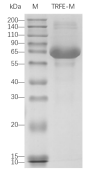
Purity | >95.0% as determined by SDS-PAGE | |
Endotoxin | <5 EU·mg-1 | |
Formulation | Lyophilized from sterile PBS, pH 7.4.Normally 5%-8% trehalose and mannitol are added as protectants before lyophilization. | |
Reconstitution | Dissolved in sterile water, it is recommended to add 0.1% HSA or BSA for long-term preservation. | |
STORAGE | ||
Stability and Storage | 12 months from date of receipt at -20°C to -70°C. After reconstitution, it is stable at 4°C for 1 week or -20°C for almost 6 months (with carrier protein). It is recommended to freeze aliquots at -20°C or -80°C for extended storage. | |
BACKGROUND | ||
Transferrin is also known as Serotransferrin, Beta-1 metal-binding globulin, TF, and is iron-binding blood plasma glycoproteins that control the level of free iron in biological fluids. This glycoprotein is thought to have been created as a result of an ancient gene duplication event that led to generation of homologous C and N-terminal domains each of which binds one ion of ferric iron. It is primarily produced by hepatocytes and is a critical component of iron homeostasis as it delivers free iron to tissue sites where it is absorbed and utilized by the body. Once it reaches a site of absorption, iron-loaded transferrin binds to its corresponding transferrin receptor and taken up by the cell through endocytosis. The iron is then disassociated, and free transferrin is released back into the bloodstream at a turnover rate of around 10 times per day. In addition to iron homeostasis, transferrin also plays an important role in the innate immune system. Downregulation of transferrin receptor expression has been linked to the reduced ability of intracellular pathogens to access a cell’s iron supply. Measurement of transferrin levels in the blood can also serve as a clinical marker for possible iron deficiency. | ||
Data | ||
SDS-PAGE | Bioactivity | |
|
| |
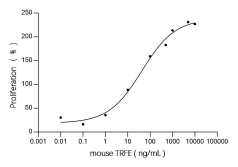
Recombinant Mouse TRFE Protein was determined by SDS-PAGE with Coomassie Blue. | Measured in a serum-free cell proliferation assay using MCF-7 human breast cancer cells. The ED50 for this effect is 0.04-0.1 μg/mL. | |
(产品包装升级中,以实物为准。)
仅供科研用途,不可用于临床诊断!
| 货号 | 名称 | 规格 | 价格 | 操作 |
|---|
| 货号 | 名称 | 规格 | 价格 | 操作 |
|---|
